18.6.08

Behind the curtain

For the first time in a long time I re-watched Singin' in the Rain and realized a common theme behind it, and my sleep eating. Both portray a monster in front of the curtain. In Singin in the Rain it's Lina Lamont, silent film's biggest starlet who's facing an imminent wake up call- talking pictures are invading and Lamont's shrill Jersey accent negates her regal screen persona. As a temporary fix for Lamont's (most) repelling attribute the film studio hires Kathy Selden (Debbie Reynold's) to dub all of Lamont's audio work. In the film's finest scene Lamont lip synchs to a packed house as Selden sings the film's namesake, hiding behind the curtain Lena is in front of. The irony of course being that even though Lena is in plain view, the curtain serves to hide her more so than it does Kathy.

In Singin' in the Rain's scope, the curtain serves to hide a bitter truth or remedy to the false. But what's interesting is that the remedy is actually more appealing than what's presented in front of the curtain. (Is this why My Fair Lady sucks and why I've always assumed The Matrix sucks?) Most obviously, Debbie Reynolds' Kathy Selden (cute) is the vocal stand in for Jean Hagan's Lina Lamont (thick). But we also see this in the film's positive portrayal of talkies (to the extent of it's presentation being a hyper-talkie- a musical). And then there's the great, abandon sound stage scene in which Gene Kelly's activates every gimmick a sound stage has to offer (fog, mood lighting, backdrops), just to tell Kathy how much he likes her.

A classic line dissecting the appeal of Hollywood is how "the extraordinary impersonate the ordinary" but films like Singin' in the Rain throw that dichotomy for a loop by doubling it; and when the fog threatens to clear around the façade, it reveals an even more savory Real. Gene Kelly is extraordinary impersonating the extraordinary (Don Lockwood). Musicals work best under this kind of doubling because the act of singing and dancing relies on an extraordinary skill. Les Girls, a Cukor directed Gene Kelly movie, relies on the same strategy- a performer is simply performing.

How all of this correlates to sleep-eating, specifically my sleep eating, is simple. I hate the act of falling asleep and attempt to fend it off nightly. This is not to be me mistaken with insomnia; I've always been envious of those who suffer from insomnia. It's not that I can't sleep, it's that I don't want to.

Maybe I should have brought up earlier in this forum (YHTALMM) my fear of death and loathing of sleep. I try to stay awake as long as possible to maximize my living, or wake-time. I fall asleep with a light purposefully left on in the hopes I'll re-awake in the night and start to read or write. I've only succeeded a handful of times but I still believe in my method and and patiently awaiting the day I wake up and read Light in August or write the first draft to a screenplay. Two nights ago this backfired- I left the Cary Grant movie Only Angels Have Wings playing and woke up thinking "If Cary Grant's dead, I'm going to die too." Most nights, however, I just fall asleep peaceful and disgusted with myself.

We never cryogenically freeze anyone good!

More often than the intended purpose, the light left on stirs me (I'm guessing) with the urge to eat. Sleep-eating, however, has provided me with the one topic of prose and a keen conversation starter at my new job (blog about my new job is on its way). What's behind the curtain of my embarrassing habit of slumber- ACTIVITY! Beautiful.

In Zizek's Parallax View he discusses a similar inquiry. As an audience we can see Lina's audience's perception of her and Kathy's persevering sweetness and talent. Or, we can oscillate between the two women (or the one woman and the acknowledgment of the other woman's existence) because of quick-cuts showing us what's in front of and behind the literal curtain.

Ah! Something wild!

As a sidenote, I'm thinking of creating another blog page called "Gave Birth to Monsters" centered on really hot/cute celebrities whose offspring are repugnant beasts like Debbie Reynolds (Carrie Fisher), Janet Leigh (Jamie Leigh Curtis), Tippi Hendren (Melanie Griffith).


11.6.08

A Sudden Blow: The Great Wings Beating Still


We here at YHTALMM are very pleased to announce the publication of the first ever YHTALMM guest lecture. Today’s visiting professor is TP (which probably stands for Tom Patriot) who will address food and the fear of flight. Following the lecture YHTALMM founding members Death Mask (DM) and HC Earwicker (HCE) will provide the first of what could prove to be several interpretive discussions/debates over the content.

Without further introduction, I’ll pass the podium to TP.

I was recently on a plane that almost crashed. Well, there was a loud sound from the engine, followed by a shaking. Several women made a noise that was halfway between a scream and a constipated moan. My ears popped and we moved closer to the layer of clouds beneath us. The captain came on over the loud speaker and said, "We're having some engine...pause (1...2...3)...irregularities, and we'll be making a (1...2...3) landing in Oklahoma City. Our descent was quicker than usual, or it seemed like it anyway. Not just to me, but to the muttering people around me, and the white-knuckled man in the aisle seat of my row. Maybe we we're actually safe all along, but the point is that none of the passengers seemed to think so.

When we had touched down and taxied to the gate, the flight attendant explained that we would be waiting in the otherwise-closed terminal for another plane to come from Austin and a crew from Dallas. It seemed it would be awhile. She did, however, mention that there would be refreshments served.

Now, considering that we all had, collectively, at least a fleeting sensation of impending death, I would have expected that to be the consensus topic of conversation--the what-does-it-all-mean and before-my-eyes and kids-growing-up-without-a-whatever bullshit seemed inevitable. I was wrong.

Pretzels. Flight 916 was mostly concerned about pretzels. Every topic of conversation I overheard was about snacks. "So, I guess they'll be serving us snacks." "The lady said there would be snacks, or food, or something...I hope it's something good." "God, they almost killed us, the least they could do is hurry up with those snacks." NOTE: I don't completely disagree with the last sentiment.

When the snacks did come (little bags of pretzels along with the standard array of non-alcoholic beverages that can be found listed in the back of your in-flight magazine...they wouldn't even give us the fucking booze!), it was what I would have expected the crowd to look like as it rushed toward the emergency rows of a burning fuselage. In my experience, no one really likes those little pretzels (not to be confused with the big pretzels you can get with a variety of dipping sauces as free samples at the mall), but will certainly eat them if they are placed in front of you. They seem, to me, like a totally neutral object. Not something one would scorn, but certainly nothing you feel a strong sense of desire toward.

Maybe it is just another indicator that Americans are fat and stupid (many of these passengers, I should note, were eating shitty airport food while we waited in Dallas...they couldn't have been THAT hungry). But I wonder if it was something more.

I know that your blog deals specifically with sleep-eating (many of my fellow passengers were, of course, asleep in that dark cabin prior to the rude awakening), but I wonder if there is any correlation between this specific type of gluttony and a brush with that eternal, final sleep.


HCE: Do you want to start or should I start?

DM: I’ll start.

HCE: Okay. Good.

DM: To answer TP's closing question, yes, there is a correlation between the sudden desire to eat and your flight’s brush with disaster. For example, you only have to watch Anthony Bourdain’s “No Reservations” for about ten minutes before Anthony asks his ethnic tour guides what their final meal would be if given the chance to choose. After an abrupt brush with death your fellow passengers were made aware how close they all came to forgoing their last meal-wish and as an attempt to regain a harness on the longevity of their lives. The passengers on Flight 916 immediately desired a food-object which is barely enjoyable, and non-substantial as if to say “I’m alive and going to live on to eat many, many meals and therefore I’m going to eat shit right now.”

HCE: I find Anthony Bourdain abrasive. I feel like he’s purposefully confrontational with the other chefs, like he’s trying to start shit. Although he was purposefully reverential when he went to el bulli because he knew that dude would fuck him up (in a strict culinary sense) if he played him like that. I don’t know that the food was necessarily an expression of the “will-to-live” like you suggest. I think it was more of an “anything to get through” kind of deal. I think the whole brush-with-death-gives-you-a-sunny-look-on-life thing originates from Hannah and Her Sisters, and now people feel obligated to have it. When I fell off the bow of a deep sea fishing boat and was pulled out of the sea I was mostly embarrassed that I almost killed myself. I certainly didn’t write a bucket list or some shit like that. I’m going to lob you a softball and close by positing that rather than being the affirmation of life that you suggest the pretzels signify what Zizek refers to as the “nothing” that fills the void of modern existence. I’ll let you elaborate because I know that will make you happy.

DM: Anthony Bourdain looks a lot like Humphrey Bogart and works for the Travel Network now, not the Food Network. And I’m not saying that those on board of TP’s flight consciously were aware of their renewed zest for living- I’m more trying to express how immediately after a near-death experience, humans revert back into killing themselves slowly. On Zizek’s “nothing”, you’re right, I really like talking about this. In Welcome to the Desert of the Real, the documentary unfortunately titled, ZIZEK!, Slavoj talks about how modern products are sold without their malignant quality. Coke without sugar, decaffeinated coffee, cyber-sex, etc. Pretzels, in TP’s experience acts as Zizek’s “nothing”. If the flight offered “the big pretzels you can get with a variety of dipping sauces as free samples at the mall,” they would no longer place themselves as the “nothing”. The reason why these products are interesting to Zizek is because he feels the “nothing-ness” quality makes their consumers feel like they always desire them: since they consist of nothing one can never satisfy their hunger for them.


HCE: Right. Right on. The thing about it is, in The Fragile Absolute, Zizek talks about how the “nothing” of meaningless and substanceless food products fills the “void” created by how the horrible unavoidable shit of human existence is slowly encroaching on everyday life. This “void,” according to Zizek, used to be filled with holy objects; beautiful works of art in the renaissance were the response to the dead babies that clogged the renaissance’s aqueducts. Now, though, the “void” is filled with “nothing.” In this case, the “void” is created by the imminent reality of a hollow metal tube filled with ash-crusted corpses. The “nothing” that the passengers stuffed their craws with just happened to be the most meaningless (free) object. Pretzels.

This is exactly how I’ve been thinking about sleep-eating lately. Like the waking part of life creates the “void,” and like Freud said in The Interpretation of Dreams, at the fundamental level dreams are simply the fulfillment of deferred waking desires. Therefore, since now all of our “holy objects” are food, the void that needs to be filled in sleep because of the omnipresent horror of waking life must be filled with “empty” calories.

DM: Freud also believed that dreams are presented as they are (through symbols) because if we saw our actual desires face to face, it would be so upsetting we’d wake up. Like if I were married but wanted to sleep with my husband’s brother, I might have a dream where I sleep with someone with his name or job or another signifier of the brother. Like in Annie Hall when Annie dreams that she breaks Frank Sinatra’s glasses. The film interprets this as her want to break away from her controlling relationship with Alvy Singer. TP mentions how certain items on the flight menu were made unorderable or unavailable. By barring specified objects (actual meals and actual drinks) the passengers were spared a total awakening to the trauma that had just occurred. Much like how I sleep-eat foods I feel no hunger for or are only partial foods of an entire craving (breakfast bars).

HCE: But in a way I feel like even if the shitty drinks and expensive sandwiches were available to buy, the majority of the people on the plane would choose the free pretzels, because they are the most arbitrary and meaningless (as a means of avoiding any choice). So, in a way I agree with your assertion that the alcohol and grinders are closer to the horror of true desire.

Two Woody Allen references, two Freud references, two Zizek references, THREE Anthony Bourdain references. What does that say about us? Also, how do you think the Death Wish plays into TP’s submission. Oops, that’s three for Freud.


DM: Okay, I agree with your first statement but I think that the passengers are more satisfied with having something barred from them than they would be if the menu was entirely open. They like the idea of having something they only marginally desire forced on them. Upping the Zizek reference to FOUR, he claims that there are two schools of fathering. The first being the “tough”, “patriarchal” father is the kind of parent who will force their child to call their grandparents every weekend, because “they have to.” The second is the father who tells his child to call his grandparents only if they want to- but what this ultimately does is make the child feel like they have to want to call their grandparents. In the end, Zizek believes that the first version of the father is the preferable one because it is less manipulating. People dislike choices and therefore the passengers aboard TP’s flight were relieved not to make one.

As far as Freud’s death wish goes, I hit upon that above when I noticed how after a confrontation with death, the passengers chose to consume an object which their body reacts negatively towards.

HCE: Wow. Thanks for that Death Wish illumination. Seriously enlightening.

Okay, I’m done being a dick. But I do really like your Strict Dad/Lenient Dad comment. You’re right. The passengers were relieved that the “for sale” items on the menu were disallowed. It represented the authority that they sorely longed for when “The captain came on over the loud speaker and said, 'We're having some engine...pause (1...2...3)...irregularities.' Like, if the captain had just said “Sorry, we’re all going to die. No cell phone use” the passengers would have been relieved.

Alright. Final thoughts. On a scale from 1 to 10 how YHTALMM is this?

DM: I like the new forum. I think it’s about a 7.5, pictures considered. We should do this to a film sometime soon.

HCE: I’ll concur. You had the first word and I want you to have the last one. Quick! Name the film we’ll make:

DM: P.S. She Fell Over.

9.6.08

Among his Dogs and Playthings, Who is Stirred


A Performance of Titus Andronicus Staged by Your Genetic Material.

I had promised some thoughts on the transubstantiation qua interchangeability of inheritable qualities in a previous post. The thing about inheritance is in the physical tangible sense the conversation does not just hinge on the a priori but demonstrates on the most basic level how we understand all a priori debate. In the pejorative sense we instinctually recognize the details of deformation in the parent body manifest in the child; this recognition of the duplicated other is as fundamental as shrinking away from a punch. Whether or not the actual genetic trait is as obvious as a hunchback the introspective Quasimodo provides the perfect signifier for the collective understanding of these a priori shortcomings; i.e. the pockmarks on a mother’s face predict and explain the poor skin that isolates the daughter. As I previously mentioned, this basic recognition is the explanation for all knowledge of the preexisting. To borrow a phrase from Spinoza, we identify the chain of cause and effect that explains away the present dependent on our intrinsic physical understanding of how children look and develop into their parents.

Yet common knowledge still fails us in its inability to recognize the similarity between these (perceivably) inescapable physical traits and the (assumed) avoidable mental ones. The thought that the development of the personality is a posteriori of any genetic interference is pure ridiculousness. The development of the hunchback ego follows a surprisingly identical path to the one of the hunchback father. Outside the sheer improbability of a cultural shift in the perception of hunchbacks, the same could hold true for countless repeated generations. And, personally speaking, if the Disney film can’t make hunchbacks lovable I don’t know what could (other than key passages from Malone Dies and Finnegans Wake).


You could probably read every word of Finnegans Wake and not realize this is the protagonist.

Although I’ve gone a long way to get to a simple point, Death Mask is right when she suggests sleep-eating could be dependent on her mother, just not in the way she might have hoped. In a sense, her sleep-eating was preordained; it exists as an a priori trait similar in all aspects to her hair and eye color. And in case anyone misunderstands me as arguing for the viability of fate, I suggest you read this post again. Now, ask yourself, what is the difference between fate and inevitable universality? Anything?


Big things cracking at YHTALMM. Sometime this week we get our first guest lecture, followed by sleep-eating in classic movies (by Death Mask) and the dissembling aspect of the corporal body (By HC Earwicker).

22.5.08

When We Were Children, Staying at the Archduke's


These twins both independently thought of the same cheesecake at the same time.

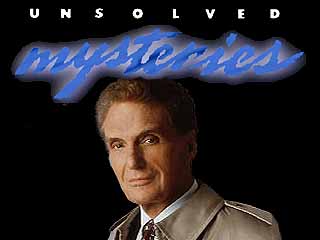
The actual ability of anyone to simultaneously come to the same conclusion as another without outside communication is commonly relegated to the realm of urban myth and Robert Stack’s steely narration of the episode of “Unsolved Mysteries” where those identical twins predict each other’s car wrecks. Or something like that. However, the phenomenon is considerably more normal and only goes to show that the reality of instructive structure and its limiting effects on the cultural boundaries of man’s natural inclinations make us much more alike than anyone would care to admit. Frequently the end result is the forced dissimulation of our congruence through the concussive interference of fists.


Fully two weeks of my childhood were spent solely in watching this program.

A historical example of this phenomenon (although it probably doesn’t even deserve that title) was frequently imparted to me by my favorite college professor; namely, the discovery of the calculus by Leibniz and Newton concordantly. If we can forgive the fact that it is supremely annoying when someone refers to it as “the Calculus” when “Calculus” would certainly suffice, we find evidence that shows (supposedly) that although the two were in frequent contact both Newton and Leibniz were so overwhelmed with paranoia that they refused to discuss with one another the enormous mathematical discovery they were both in the process of stumbling upon. When both published their findings within a year of one another their worst fears appeared to have been realized and they immediately hated each other with such a fervent ferocity it’s surprising Newton didn’t just stab Liebniz in the heart and throw him out a window. Although he may have, my historical knowledge is spotty.


Newton to Leibniz: Checkmate, bitch.

In any case, during my usual research on the continuing impotence with which modern medicine addresses sleep-eating (they call it “parasomnia” – HA!) I stumbled upon a passage that may encourage Death Mask to pursue a Newton v. Leibniz strategy with the author of Talkaboutsleep.com:

Sleep eating is more common in younger women. Symptoms typically begin in the late 20s. Episodes may reoccur, in combination with a stressful situation, or an episode may occur only once or twice. Additionally, many parasomnias seem to run in families, which may indicate that sleep eating is genetically linked. (From www.talkaboutsleep.com)

The interchangeable nature of genetic inheritance (i.e. a priori medicinal pseudo-physiological physical scientific anthrobiological deoxyribonucleic-acidic anatomical reproduction) and psychological inheritance (i.e. Freudian Elektral and Oedipal residual bricolage of inheritable and free-repeating trauma) will be further discussed at a later date. Succinct preview: contagion is ontologically and physically permeable.

21.5.08

Leftovers Pt. 2: Art = Nutrigrain


If there is a connection between butyric acid which stinks and the best perfumes, could we on that account put "the best perfume" in quotes? Could we therefore say: "the 'best' scent is really all sulphuric acid?"
- Wittgenstein

17.5.08

LEFTOVERS Pt. 1: Smaller courses and the residue of hunger


My colleague is correct. Sleep eating did "strike back", but in a subdued form. From first glance I perceived the return of sleep eating as mere sloppiness on my behalf.

Why wasn't I using the trash can in my room?

Why are there little wrappers everywhere?

The truth hit me when I found the casing to a snack bar I don't even like in between my bed frame and the wall. Only in my sleep do I eat food I barely enjoy! Sleep eating had entered my life again! This time, however, my subconscious knows the evidence has to be less direct, less incriminating. Previously my affliction felt free to sprawl itself throughout my slumber (I'd eat entire, messy meals), now it knows to curl and conceal itself from me in the form of convenient snack food. Why has my ailment (cure?) chosen to scurry away from me? As discussed before, I believe it is due to my consciousness' reciprocity for my unconsious' desire to sleep eat. This blog's acknowledgement of sleep eating comes too near to consummating the Real desire- to eat while awake, and interrupts the direct relationship between sleep eating and the unconscious mind. The ruptures result in this new subdesire, or subdued desire, and culminates into what Freud would call "residue".

For Freud the residue is the cause of art. Art becomes a storage place for the excess desires the conscious minds has learned is unrewarding to pursue. I am not an artist. I only eat. Therefore the ruptures or short circuits in my psyche make themselves present through my eating habits. For instance, the other day I was close to skipping my volunteer job and after realizing how awful that instinct was, I ate enough Taco Bell, became so sick I should have skipped the volunteer gig and forced myself to go anyway as punishment for the evilness in me inclined to skip.


(LEFTOVERS PT.II is in the works. I plan on tying these theories together with the help of a graph which blames my parents. I just had a birthday and I've found myself less able to use scanners than I was last year. Therefore, the graph will be posted under my partner's name.)

13.5.08

Slouching Towards Bethlehem to be Born


Alas, his lifelong desire for the number two was undone by its fulfillment.

Whatever thing we may not lightly have,
Thereafter will we cry all day and crave.

—Chaucer


It’s coming.

But like a parent with an overly curious child, I can’t tell you how I know or why I am so steadfastly convinced of it. All I can tell you is that if you really want to get that first communion wafer you have to believe with all your heart that it really is the body of Christ. Then you have to sleepwalk to the altar and take it.

Death Mask got me thinking when she brought up an excellent point about reciprocal desire; that in her courting sleep-eating she felt she was pushing it away. And she was right. Sleep-eating chose her (as it once chose me), yet as soon as she chose it back it thought a lot about it and decided it might be making a mistake and the only way to know for sure was to spend some time apart to just gather all the feelings you know? Just take a moment to breathe and analyze and sort through all of this shit it’s going through right now.

The mistake is not the desire, but the courting. Specially preparing meals for sleep-eating and going out of one’s way to open doors for it makes sleep-eating feel coddled. Sleep-eating needs its independence.

Except when it doesn’t. Like, for instance, when it comes back to me and I start treating sleep-eating like shit.


I would like a pound of that honey-cured ham eek half a pound of provolone.

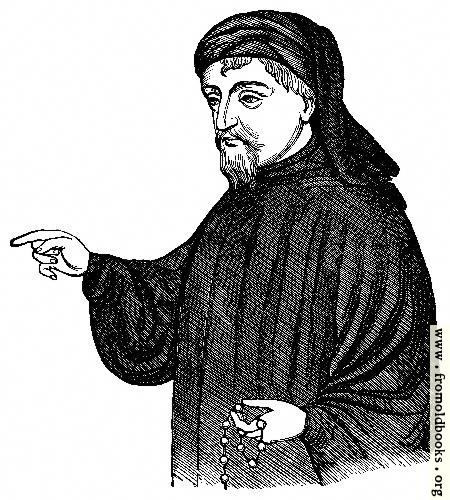
See, the thing is, like the Wife of Bath in Chaucer’s Canterbury Tales, sleep-eating loves he who “was of his love so dangerous to [it].” And in case you have trouble with the Middle English, maybe I’d better explain that the Wife of Bath is saying her favorite husband is the one who “had beaten [her] on every bone.” And if that’s too difficult to understand still, I recommend you go re-read Carver’s “What We Talk About When We Talk About Love.” And if you’re still lost, I guess just go write a paper on “Cathedral.”


Teacher says, every time a freshman writes a paper on "Cathedral" Carver makes this face and rolls around in his grave.

The point is, sleep-eating will come back to me because I want it. And because I won’t respect it.